ALIVE
All courses
Taught by an AI avatar

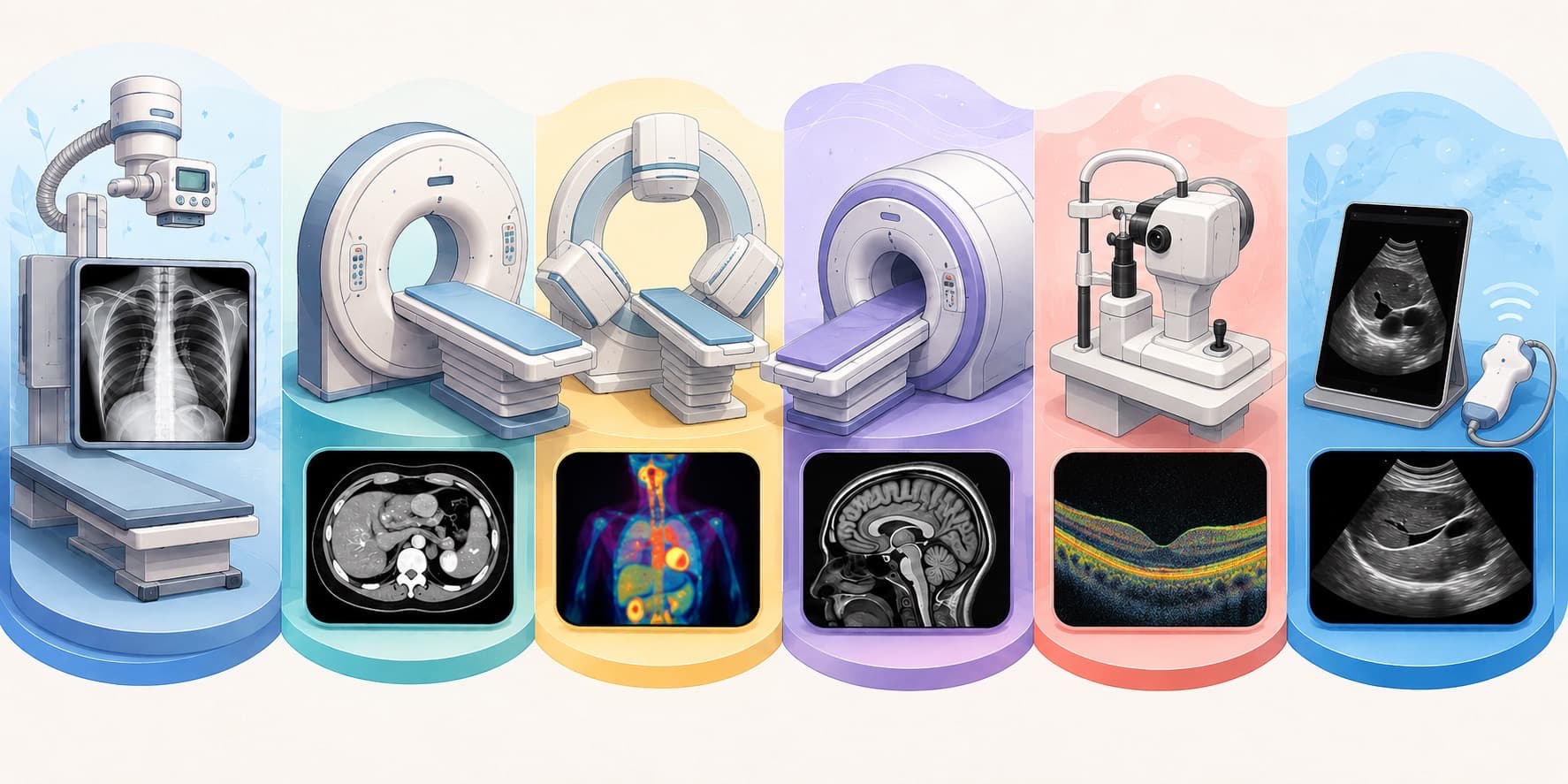
This course serves as an introduction to biomedical instrumentation and imaging with a focus on the acquisition and monitoring of vital signals. Basic principles for the selection and appropriate use of instruments for solving bioengineering and medical problems such as microscopy, magnetic resonance imaging, and ultrasounds, among others, are addressed.

23 lecturesCurated by Course InstructorFree

How this course is taught

The AI avatar teaches, asks, evaluates, and remediates. An AI instructor in your professor's own voice delivers every lecture, pauses to ask you questions, grades your free-form answers with formative feedback, and a personal AI tutor picks up wherever you struggle. The human instructor monitors progress and curates the content.

Course syllabus

BMED 2300, Bio-Imaging and Bio-Instrumentation

Credits and contact hours

4 credits, 4 contact hours

Instructor and Coordinator

Ge Wang, Hisham Mohamed

Textbook(s)

Introduction to Biomedical Imaging. Andrew Webb. IEEE Press series in Biomedical Engineering, 1st or 2nd edition.

Supplemental materials

Additional materials are posted on RPI-LMS or my dedicated dropbox folder related to specific lecture topics.

Catalog Description

This course serves as an introduction to biomedical imaging, instrumentation and application with focus on data acquisition and image reconstruction. Basic principles of major biomedical imaging modalities and appropriate use of instruments will be covered for solving biomedical problems, such as x-ray radiography, computed tomography, nuclear imaging, magnetic resonance imaging, ultrasounds, and optical imaging.

Prerequisites

PHYS 1200 (Physics II)

Course Classification

Required for all BME students

Course Outcomes

Students who successfully complete the course should be able to:

Perform basic Fourier analysis and signal processing tasks using MatLab
Draw and explain the critical components of biomedical imaging instruments
Understand how the systems work, and describe the characteristics of the resultant images
List advantages and limitations of each imaging modality

Student Outcomes

An ability to identify, formulate, and solve complex engineering problems by applying principles of engineering, science, and mathematics
An ability to apply engineering design to produce solutions that meet specified needs with consideration of public health, safety, and welfare, as well as global, cultural, social, environmental, and economic factors
An ability to communicate effectively with a range of audiences
An ability to recognize ethical and professional responsibilities in engineering situations and make informed judgments, which must consider the impact of engineering solutions in global, economic, environmental, and societal contexts
An ability to function effectively on a team whose members together provide leadership, create a collaborative and inclusive environment, establish goals, plan tasks, and meet objectives
An ability to develop and conduct appropriate experimentation, analyze and interpret data, and use engineering judgment to draw conclusions
An ability to acquire and apply new knowledge as needed, using appropriate learning strategies

BME Program Criteria

The program must prepare graduates to understand biology and physiology, and the capability to apply advanced mathematics (including differential equations and statistics), science, and engineering to solve the problems at the interface of engineering and biology.
The curriculum must prepare graduates with the ability to make measurements on and interpret data from living systems, addressing the problems associated with the interaction between living and non-living materials and systems.

Topics

Linear system, Fourier analysis, signal processing, circuit and network analysis; image quality assessment; principles, instrumentation and application of x-ray radiography, computed tomography, nuclear imaging, magnetic resonance imaging, ultrasound and optical imaging.

Syllabus

Lectures
  • 1. Lecture 1 - Introduction

  • 2. Lecture 2 - MatLab I (Basics)

  • 3. Lecture 3 - System

  • 4. Lecture 4 - Convolution

  • 5. Lecture 5 - Fourier Series

  • 6. Lecture 6 - Fourier Transform

  • 7. Lecture 7 - Signal Processing

  • 8. Lecture 8 - Discrete FT & FFT

  • 9. Lecture 9 - MatLab II (Homework)

  • 10. Lecture 10 - Network

  • 11. Lecture 11 - Image Quality

  • 12. Lecture 12 - X-Ray Physics

  • 13. Lecture 13 - CT Reconstruction

  • 14. Lecture 14 - CT Scanner

  • 15. Lecture 15 - MatLab III (CT)

  • 16. Lecture 16 - Nuclear Physics

  • 17. Lecture 17 - PET & SPECT

  • 18. Lecture 18 - MRI I

  • 19. Lecture 19 - MRI II

  • 20. Lecture 20 - MRI III

  • 21. Lecture 21 - US I

  • 22. Lecture 22 - US II

  • 23. Lecture 23 - Optical Imaging

Student reviews

No reviews yet.